What Attorneys and Bankers Won't Tell You About DESPAC Filings — Brian Cavalli

EdgarAgents' Brian Cavalli on the part of DESPAC SEC filings attorneys and bankers rarely mention: why the financial printer should come in early, EDGARizing, XBRL, and CCC and CIK codes.


Key Takeaways
- An SEC filing doesn't move without a financial printer.
- Bringing the printer in late is one of the biggest reasons DESPAC filings blow their deadlines.
- Engaging the printer early can cut filing time and legal costs in half.
- S-4 and F-4 filings are the biggest documents a printer handles, and XBRL tagging is finalized last.
- Most companies apply for CCC and CIK codes too late.
Attorneys and bankers rarely say this part out loud: your SEC filing doesn't move without a printer, and waiting too long to bring one in is one of the biggest reasons DESPAC filings blow their deadlines.
Brian Cavalli, Director of Sales at EdgarAgents and a 17-year veteran of the financial printing industry, joins host Chaz Churchwell to unpack the piece of the DESPAC process most sponsors overlook. Brian explains what EDGARizing a document means, why typesetting exists, how XBRL tagging fits into an S-4 or F-4 filing, and why CCC and CIK codes trip up first-time filers, plus why bringing the printer in early can cut both filing time and legal costs in half.
What We Cover:
- What a financial printer actually does in an SEC filing
- What "EDGARizing" a document means
- EDGAR-only filings versus Typeset, and why most DESPACs choose Typeset
- How XBRL tagging works and why it's finalized last
- Why S-4 and F-4 filings are the biggest documents a printer handles
- Typical turnaround time and how to speed it up
- CCC and CIK codes: the identification most companies apply for too late
- Why an experienced deal team avoids the biggest points of delay
- Why bringing in the printer early can cut filing time in half
Connect with Brian Cavalli:
Website: https://try.edgaragents.com/
LinkedIn: https://www.linkedin.com/in/briancavalli/
Connect with Chaz Churchwell:
LinkedIn: https://www.linkedin.com/in/chazchurchwell/
Protect Your Transaction: Churchwell Insurance Agency specializes in D&O, E&O, representations and warranties, and public company liability for SPAC sponsors, DESPAC targets, and post-merger companies. https://www.churchwellagency.com/
Follow The DESPAC Podcast: Website https://www.thedespacpodcast.com/ · LinkedIn https://www.linkedin.com/company/thedespacpodcast/ · YouTube https://www.youtube.com/@thedespacpodcast · Apple https://podcasts.apple.com/podcast/id1855942535?mt=2&ls=1 · Spotify https://open.spotify.com/show/1pA3EuEU656ZsEEx1Te4C2
A One Iron Network production: Executive Producer Joshua Wilson
The DESPAC Podcast is for informational and educational purposes only. Nothing in this content constitutes legal, investment, tax, or financial advice, nor a recommendation to pursue or avoid any transaction. Consult qualified legal, financial, and tax professionals before acting on any information discussed.
News Theme 1 by Audionautix is licensed under a Creative Commons Attribution 4.0 license. https://creativecommons.org/licenses/by/4.0/
THE DESPAC PODCAST DISCLAIMER
The DESPAC Podcast is for informational purposes only. The views and opinions expressed by the host and guests are their own and do not represent the views of One Iron Network LLC, its affiliates, or any sponsoring organization.
Nothing in this podcast should be interpreted as legal advice, investment advice, tax advice, or a recommendation to pursue or avoid any transaction. Discussions may reference SPACs, DESPAC transactions, securities regulations, or public-company readiness frameworks. These conversations are educational in nature and should not be relied upon when making financial or strategic decisions.
Listeners should consult qualified legal, financial, and tax professionals before acting on any information discussed in this podcast. Any examples or scenarios mentioned are illustrative and may not reflect current market conditions or regulatory requirements.
Participation by a guest does not constitute an endorsement of any company, strategy, product, or service. References to specific firms or individuals are for context only.
One Iron Network LLC and the DESPAC Podcast disclaim all liability arising from the use of or reliance on the information presented.
Frequently Asked Questions
How does the DESPAC SEC filing process work?
Brian Cavalli of EdgarAgents says an SEC filing doesn't move without a financial printer, and waiting too long to bring one in is one of the biggest reasons DESPAC filings blow their deadlines. Bringing the printer in early can cut both filing time and legal costs in half.
What does 'EDGARizing' a document mean?
EDGARizing means converting a document into the format required for filing on the SEC's EDGAR system. Cavalli explains EDGAR-only versus typeset filings, and why most DESPACs choose typeset.
What are CCC and CIK codes?
CCC and CIK codes are the identification companies need to file with the SEC. Cavalli says most companies apply for them too late.
Who is Brian Cavalli?
Brian Cavalli is Director of Sales at EdgarAgents and a 17-year veteran of the financial printing industry.
00:00 - Welcome and Introducing Brian Cavalli
01:22 - What EdgarAgents Does as a Financial Printer
02:22 - Why Every Public Company Filing Needs a Printer
03:22 - What "EDGARizing" a Document Means
06:22 - Handling S-4 and F-4 Business Combination Filings
09:22 - Turnaround Time and How to Speed Up a Filing
13:22 - XBRL Tagging and Why It's Finalized Last
15:22 - Typesetting: What It Is and What It Costs
20:22 - What Holds Up a DESPAC Filing
22:22 - CCC and CIK Codes Most Companies Apply for Too Late
24:22 - When to Bring In the Printer (and a Real Deal Story)
27:22 - Personal Side: Football, Fear, and Staying Sharp
Chaz Churchwell:
What's going on everybody? It's Chaz, your host of The DESPAC Podcast. Fall is starting to creep back in ever so slowly. The smell of football is in the air, and I'm fired up to be here with Brian Cavalli from EdgarAgents today. Brian, what's going on, brother?
Brian Cavalli:
I'm doing great. Thank you so much for the opportunity here, Chaz.
Chaz Churchwell:
Absolutely, man. I'm so excited to get you on the show today, uh, because I feel like for people who don't understand what a, what an Edgar printer is, um, I, I feel like you're gonna be able to step in and give a great moment of, uh, of clarity for them. So, thanks so much for being on the show and for, uh, for helping these people be able to understand how the sausage gets made on your side of the table.
Brian Cavalli:
Absolutely. So
Chaz Churchwell:
tell me, let's start off just a little bit, let everybody know about you and who EdgarAgents is, real fast.
Brian Cavalli:
So, uh, again, Brian Cavalli. I've been working here at EdgarAgents for roughly about 10 years. Uh, been in the industry for a little over 17, and, um, basically what we do here at EdgarAgents, we're the leading financial printer. We handle more SPACs, de-SPACs, IPOs, uh, whether it be here in domestically or overseas. Uh, you know, we're just here to sit there and help out the financial printing world.
Chaz Churchwell:
I love it. Appreciate it, man. And so here's what I, what I want everybody to, to really kind of start out by understanding, like, what function in a public company does a printer serve? I mean, are you guys just doing Xerox copies, like, trying to put FedEx out of business? What's up?
Brian Cavalli:
Absolutely not. And it's, and it's a great question because I, I, I can tell you in my 17 years, I have had companies go, "I don't get it. What, what, what exactly do we need you for? Doesn't the attorney do this? Doesn't the banker do this?" And the way I kind of say it is, we are a piece of the public company puzzle. So yes, you're gonna need an attorney, you're gonna need a banker, you're gonna need D&O insurance, you're going to need an auditor. But you are not filing that document, whether it be an S1, an F1, an S4, a 10-Q, without the financial printer. And that's what we do. We are actually taking the Word document that is being compiled from your deal team, and we are actually EDGARizing it, and then we are filing it with the SEC. So we are a very important piece, sometimes overlooked. Uh, we always joke around that without us, you're not getting it filed. So we are a necessary evil to the process.
Chaz Churchwell:
So you said EDGARize it. Yes. So let me, l- let's talk about that real quick, what EDGARize means.'Cause here's the way I think of EDGARize it, and you can be like,"Dude, that's right on," or you could give a little point of clarification. Sure. But, like, I remember in grad school, we had to purchase something called a Chicago Style Manual, and basically we had to format everything we did when we wrote papers, including our citations, everything, it had to be incredibly concise in its format style, in line with this Chicago Style Manual. Is EDGARizing kind of like that, but falling in line with SEC's guidelines of how they want stuff to be laid out?
Brian Cavalli:
That is actually a great explanation. Probably have done it better than I could have done it. So every bank has their own stylization. And what we need to do as the printer or, or filer, we need to know JP Morgan's, uh, style. We need to know Morgan Stanley's style. We need to know each and every style to put on our platform. And what we then do is, as I mentioned, we EDGARize it. And really what, what EDGAR is, it, it, it's just a term or a language that the SEC uses. It stands for Electronic Data Gathering Analysis and Retrieval. And what it does is it's taking that Word document that is being put together, and we are now stylizing it or putting it in a certain language that only the SEC can recognize. So when it gets sent from our platform to the SEC, they're able to read it through that EDGAR language
Chaz Churchwell:
I actually never knew what the acronym was, so that's so fun.
Brian Cavalli:
And I guarantee you there are maybe eight people in the world that might actually know what that means. I looked it up. I'm gonna be honest with you. Uh- I looked it up beforehand.
Chaz Churchwell:
I love it. I love it. Yeah, I had no idea what that meant. Okay, so, so let's talk about, like, let, let's talk about what it is. Like, so somebody comes to you, they've got their, uh, their S1, they've got… Well, particularly, sorry, um, b- taking our audience that we have in place, um, let's say that they're gonna come in with their S4 or their F4, and they're gonna basically say, "We've got our document." They've got it cleared by, um, by the bankers, by the attorneys. Now it comes to you. What is, like, how does the sausage get made at that point? How long does it take? What are the things that they should be expecting? I know that I hear all these things like red lines, XBRL, like, uh, EDGARized. Like, can you, can you unpack, like, what are some of the mechanics that they should expect in the process timeline-wise, everything like that?
Brian Cavalli:
So if we're talking about an S4 and F4, we're talking about basically the biggest document that, that you're going to file.'Cause in theory what you're doing is you're taking two documents and you're b- merging it together, or your business combination. So you've got a lot of moving pieces and a lot of moving parts. So let me break that down even further. You've got your two documents on your, on your S4, and you're going to then send it over to the printer. At that point in time, we are going to EDGARize it, as we mentioned, your, your language that the SEC is gonna recognize. By letting us EDGARize it, we can then send that back out to the deal teams. The deal teams are now going to review it, look at it, tweak it, change it until that they have that perfect document that is ready to file with the SEC that the world is now gonna be able to, to, to look at. But within all of that, we are gonna do XBRL, which is really just another form that the SEC has come up with, and, and we're gonna handle all the taggings. We're gonna handle all the, all, all the footnote taggings, um, to allow companies to utilize that. So what, what we're doing is we're literally taking the document that the- Auditor, the accountant, uh, rather the, the auditor, the banker, the attorney, the company have put together. They're going to send it to us. We're going to, once again, EDGARize it, typeset it. Within that document, within the days and weeks on end that are the back and forth, you are going to see a red line. And really what the red line is, it's just showing what the changes are throughout that process. Our job is to make it as seamless as possible because there are a lot of moving pieces to this throughout the process. Now, again, when you get your red lines and we've done the XBRL and everything is finalized, you're going to then give us the go-ahead, and it's really the auditor signing off on it, it's the attorney signing off on it, it's the banker signing off on it, and then the company goes, "Send." We then take that finalized document that has taken weeks on end to put together, and we hit a button, and it goes off to the SEC, and then in within minutes, you're going to be able to vi- visualize that on the, uh, on the SEC website
Chaz Churchwell:
Got it. Okay, okay. So, how long, how long does it normally take, like, once you get that S4 or F4 put in your box, what is the, the typical turnaround time? If they have to have it faster, like, how quick can it be? Um, what are things that might hang something up?
Brian Cavalli:
Okay, so let, let me, let me take each question because there is no, "It takes this amount of time."'Cause you've got it, some, some of your S4 documents are gonna be 800 pages, some of your S4 documents are gonna be 300 pages. But typically what we like to say is, so our platform allows companies to get it done faster than most, and it's really just a proprietary platform that we have right now that allows it to speed up the process. So when we're doing the typesetting in EDGAR, we do it seamlessly, so we're gonna do it at one time. So for your clients or my clients or the attorney's client's world, it, it speeds up the time, which is obviously gonna save effort and money, and that's really why we're doing this. We're doing this to make this as cost-effective as possible while the company is worried about getting their, their document done. So what we'd like to say is, if you provide us that initial document, we can get this thing done in probably about eight to 10 hours, and that's gonna include, you know, again, letting us take the document, conforming it, typesetting it, EDGARizing it, and then getting it back to the company itself. Um, there are ways that we can speed up the process, and what I always like to say is, when do you bring in the printer? Because we are thought about last a lot of times. Um, but if we are brought in earlier, so if you have an experienced deal team, a lot of times the attorneys will reach out to me directly and go, "Hey, Brian, we have an S4 coming up. Uh, we wanna get you on board sooner than later." And that will actually make the process a easier process for the entire deal team. And what I mean by that is if you bring us in early, you've got a, let's call it a, a 35, 45% done S4 document. There's no reason to wait for it to be completely finished. Send that over to us earlier than later. The reason why, we put that on our platform. We can then initialize the EDGARization. So w- instead of doing 400 pages, we've got 200 pages. Obviously, now we're cutting the time in half. The other reason why we say to do that is there's no reason it, for it not to be on the printer's platform. So you send that over to EdgarAgents. What we're now able to do is we've got everyone using a centralized document. So you don't have the attorney changing one document, the company changing another document, and the auditors changing another document. Because now you've got wasted time, wasted effort, wasted money. If we can centralize this, you send over the, the changes over to us, we send it back to the whole deal team. The deal team, at that point in time, they get to see what the changes were. So what we've done is we've cut the time in half. We've also cut the effort in half, which will cut the cost in half, and it'll make it a more seamless process for everybody to get this thing handled on a much faster basis.
Chaz Churchwell:
So something that I've noticed that, uh, that you've talked about is you've talked about something called typeset.
Brian Cavalli:
Yes.
Chaz Churchwell:
And then there's the, the XBRL. And so I, I feel like You didn't, and correct me if I'm wrong, I feel like I didn't hear you mention in that eight to 10-hour window the XBRL, and I feel that we didn't get to un- to unpack for our clients what typeset is. Could you, could you talk about, does XBRL, is that like this other layer? I feel like that one typically takes more time. Um, could you unpack what that is and then unpack what typesetting is?
Brian Cavalli:
Absolutely. So two-part question there once again. The XBRL, the reason why we're not doing the XBRL in the beginning part, 'cause that comes at the end. So when you, when we have fin- finished or finalized the document, that's when the XBRL is actually finished. So we can, we can do the tagging throughout the process, but it can't be finalized until the document's finalized. Because as the numbers change or get tweaked, XBRL is gonna get changed and get tweaked. So you really need to finish one to completely finish the other. So the XBRL does take the longest because it is literally being done while the process is being handled, but more importantly, it's not being finalized until the document is finalized. So that's why that does take a little bit longer. Um-
Chaz Churchwell:
So how long on that? Go ahead. Yeah. Like how long, I mean, is, is, like an extra, an extra one hour or…
Brian Cavalli:
It, it's, it's, again- Extra
Chaz Churchwell:
day, extra, extra three days?
Brian Cavalli:
Whatever. It has tremendously, tremendously gotten better. So it's funny, when XBRL came out originally, uh, it, it was taking close to two weeks, three weeks to get done. Um, some companies have gotten it down to about 72 hours. We've gotten it done, uh, we, we've gotten it actually, uh, even sooner than that. Um, I don't want to sit there and put too much pressure on my, uh, production team, which is, I say, the best in the business. Um, we've got it done, uh, in, in less than 48 hours. We can get that done. So our, our job is really to sit there and stay on top of it, and that is, and we're going kind of a little sideways, but that is just another way to make the process more efficient, is getting the team in early. So what I mean by that is if you as the company say, "I want to file on September 5th" We can work backwards. We can then say, "If you want to file on September 5th, we need a final document by September 4th." By providing us a final document on September 4th, we can now start the XBRL process. We know there might be a tweak here or there, but we're almost forcing everyone to get on the same page. By everyone getting on the same page, we can be as efficient as possible, which is gonna get you your filing done exactly the date that you want to get it done by.
Chaz Churchwell:
I appreciate that. Okay, so now let's talk about typesetting. What the heck is that, and why does it sound archaic?
Brian Cavalli:
It's… It- Well, it is archaic. It's been do- it's been done since the beginning of time. Um, but why do we do typesetting? Typesetting- Moses was typesetting
Chaz Churchwell:
on Mount Sinai?
Brian Cavalli:
No, i- it's a fair question, 'cause people go, "Do I need it?" The, the answer is no, you don't need it, but you want it. It is going to make the process much easier for everyone to utilize. Also, as I mentioned earlier, you have certain banks that have certain stylizations. You do. The only way to get that stylization is through the typesetting, because you need to tweak and it's got to be certain fonts and it's got to be certain sizes. That's what the typesetting's gonna be able to do. Also, what- Okay the typesetting is gonna be able to do, which is even more important why the auditors love our platform, is 'cause we have a single source platform, so your EDGAR and your typeset are being done simultaneously. The reason why you want to do that is when you have the first, call it first draft, you're gonna send that over to us. Well, we know there's gonna be alterations. We know there's gonna be tweaks to it. You're gonna want to see specific changes. That is on the typeset platform. So you want to see what was changed from the first version to version 12, we can then do that, and that's what the typeset platform is able to provide to you, is the change of pages, the exact, uh, you know, really tweaks that have been done. And so if you've got to figure, you're now saving the attorney's time and the auditor's time by instead of going through an entire document, you can go through certain changes, and you can sit there and really knock this thing out
Chaz Churchwell:
So you're saying that it'll actually save them money on their billable hours?
Brian Cavalli:
It absolutely will because you're, you're, you're cutting the time down in, it could be in half even.
Chaz Churchwell:
Got it. So, like, I, I've always been told that typesetting costs a little bit extra to have- It does … done because it's kind of an optional thing. So, like, so even though it might cost a little extra, like, I mean, on average, like, maybe how, how much does somebody expect to pay for typesetting just to kind of, kind of give, to factor that out as a trade-off?
Brian Cavalli:
It, it varies. So, so for, I, I can give you, instead of the exacts, 'cause it's gonna vary on, on the, on the document- I get it.
Chaz Churchwell:
Yeah… Brian Cavalli: but- Doc size, everything like that can play into
Brian Cavalli:
it … exactly. But, but let's say it could one, let's say it could not quite double, a little less than double the price. Um, but what you're, what you're basically going to do is you're saving three, four times the amount of time to get that done.
Chaz Churchwell:
Got it. And then if you've got an attorney that's working for 1,000 bucks an hour, then all the sudden you're saying that it's paid for itself, and then given a little bit of savings?
Brian Cavalli:
Uh, uh, and then some. And, and typically the attorneys would prefer it because, again, you're making the, you're making their time more valuable because you're actually getting more work done in a shorter period of time. What I understand. And what I know, and, and I'll tell you, Chaz, what I do is, I, as I said, I've been doing this for about 17 years. I'm almost too upfront with my clients. I'm not trying to get the most out of them. I'm trying to give them the best experience, and I'll give them both versions. You can do it for this on EDGAR only. You could do it for this on Typeset. Let me explain to you the difference. Let me explain to you why the majority of the offerings are done in Typeset, and then you can choose from there. And then a lot of times, you know, we bring in the deal teams, and the deal teams will go, "For this particular round, we don't need Typeset." But as we start doing the de-SPACs, which is what we're talking about today- I have done s- eight out of 10 are done in typeset because it's just too much going on, and it's just, it's an easier way to control the process.
Chaz Churchwell:
Dude, my mind is still blown at the idea of attorneys saying they're okay with lower billables. Like, I'm still struggling to get past that one.
Brian Cavalli:
Because, because of their time. It's all about their, their time, if you think about it. They can do more work- Right on … in, in, i- if, if they can get it more, you know, kinda more, more shaved down as far
Chaz Churchwell:
as
Brian Cavalli:
time goes. I
Chaz Churchwell:
love it. I love it. That's how the good ones are. That's how the good ones are.
Brian Cavalli:
Which is what I like to deal with.
Chaz Churchwell:
That's awesome. So okay, so let's keep the conversation going, and let me ask, um, w- what are some of the things that you see that when there's a private company going public through a DESPAC, what are some of the things that you come across that can hold up the filing getting across the table and getting done?
Brian Cavalli:
Not being prepared, not having a strong deal team. Those are the two things right out of the gate. And, and I'll explain to you what I mean by the, the, the strong deal team. There are going to be things that pop up around every corner. It, it's inevitable. Th- there is no perfect deal, no perfect, uh, way, way to run, uh, th- this process. When you have an experienced deal team, the attorneys, the bankers, the auditors, they've pretty much seen everything that can pop up. So once again, you have an experienced deal team, at that point in time, they are not wasting going, "I don't know. Now what? What do you think? Where do you think?" They'll sit there and step up and go, "This is what I've seen in the past. This is how we're gonna sit there and make this, uh, uh, more efficient going forward." So that, that's, that's the first thing. The second thing is the SEC codes. So when you're a private company and you file public, you need CCC codes, you need CIK codes. And typically, again, the better attorneys will, uh, will tell the attor- will tell the companies that, "Hey, we've got to apply for the CCC and the CIK codes." And all they are, it's identificat- it's your identification to file with the SEC. I always ask that question right out of the gate, whether it be yourself saying, "Hey Brian, I have a company for you," a banker, an auditor, an attorney. If we have a company that's looking to do, uh, uh, a re- a, a registration statement, my first question is, "Do you have your CCC and your CIK codes?" We will help the process. We will help the company obtain those codes. The reason why I say do that sooner than later, because that can take anywhere from two- To seven to 10 days. So what happens is it tends to get, "Well, we'll do that later. We'll do that later. We'll do that later." I've had companies who have waited too late and they couldn't file on time, 'cause they couldn't get the easiest part out of the way. So these are the things why I say, what could hold it up? Sometimes it's the m- it's, it's the small things. Just let's get the codes out of the way. I'll help you out with that. Don't worry about it. My production team will provide you all the information. Cross that off the list, let's move on. Those are the things that we can do. The other thing, and, and it's… I always say it's the big thing, it's having no organization. If you have no organization going on and the deal team's i- is not on the same page, you have no shot of getting this thing fired, uh, filed on time. And that's why you need to, whether it be telling us when you wanna file so we can work backwards, or it's the attorneys going, "This is what we're, this is what we're gonna provide you." And the biggest thing that EdgarAgents does more than any other printer, and I've heard this from other attorneys, I've heard this from other bankers, we are going to provide you an ETA right out of the gate. So for example, it's they're-- you're gonna send over a document Our team will say, "Received, understood," so you know that it's being looked at, and then we're gonna provide you an ETA. And candidly, I've had, everything is on a rush basis in this, in this field, and I've had attorneys reach out to me and go, "Brian, we need this done faster." Okay, let me talk to production, and we'll sit there and revamp this. But it's the open communication between the deal team that is going to allow the, the lack of consistency and, and, and the, the seamless process that we like to bring to the, to the entire team. I
Chaz Churchwell:
appreciate that. Okay, let's, let's shift for a moment. I wanna talk about, um, when the best time is to, to engage EdgarAgents or printer. And, and the reason why I think this is kind of, uh, important is 'cause you mentioned that you guys are usually the last one that's thought of. So I'm, I'm actually, you know, 1776 Acquisition Corporation is a SPAC that I'm looking to take IPO right now. Yep. And we, uh, a- and our team had, um, just a really good price put in front of us by somebody. We went with it, and then all of a sudden, my, uh, my CFO starts getting mad. He's like, "Hey, these guys don't wanna give us redlines. These guys are, they're, they're telling us to, to get our, uh, our, our stuff fully EDGARized and filed. They're, they're telling us that they're doing us a favor by getting it done in a week. We, we, we really need to get this back." And, and so they, uh, my, my CFO ended up insisting that, um, that we connect over to you, and, and then your team had it for us in, like, a day and a half- Yes … with the redlines- Over
Brian Cavalli:
the,
Chaz Churchwell:
over the weekend almost and everything like that. So, um, so I mean, should, should everybody just reach out to you a day and a half ahead of time? Or,
Brian Cavalli:
or should- If I can get, if I can maybe get three days, that'd be better. Um, but i-i- in all honesty, Chaz, it- Price is obviously very important to people. Yeah. I'm not gonna lie about that. But it can't- Yeah … be the only factor. Yeah. And I will always sit there and say,"We're, we are, we're not the cheapest. We're far from the most expensive. We are the fairest priced printer out there because of what we can do." Um, and again, when I say what we can do, I mean the timing, the turnaround, uh, the hands-on experience that you're gonna get. So the sooner the better, uh, once again, is, is, is always my, my phrase that I like to use. If we can be involved in the process before all of the Harry carry that goes on, we can really sit there and, and make sure that, that, that the filing process is not going to be an absolute, um, y- you know, complete manic. You know? We'll, we'll sit there and keep everything calm and smooth. So it, it doesn't necessarily have to be the first day, uh, that you've- Yeah … decided that you're gonna do it. But if we can get, like for, for your experience, if we can get more than a day and a half, yeah, we, we can really sit there and keep things a lot calmer.
Chaz Churchwell:
Awesome. Okay. So, uh, let's talk real quick, let's go personal for a minute, because I believe that people love doing business with people that they like. And I mean, obviously you're a likable guy, everybody in the ecosystem thinks you're great. Um, even, even your competitors hate that they love you. You know, whatever. But it's, uh, but it's one of those deals to where, like i- if you're listening on audio and you're not actually watching, I'm wearing my Dallas Cowboys jersey. If you don't know- Love it … I'm in Dallas, born and raised. So do the Cowboys suck year after year after year? Amen, yes, we do.
Brian Cavalli:
Heartbreaking.
Chaz Churchwell:
It, it's, it is- Heartbreaking things
Brian Cavalli:
alike
Chaz Churchwell:
it, it, it's been a, it's been a tough run. You know, when I was growing up in my younger years, it was, uh, it, it was good times. But, um-
Brian Cavalli:
Three out of four years we got to celebrate… Chaz Churchwell: you know, it, it's, and I, I actually saw somebody with a jersey that, the Dallas Cowboys jersey that said the, the, where the last name goes, it said, "Sad Since," like Sad Since, and then down below it was the number 1995. And, like, they've been sad since 1995. Yes, they have. And so, but, uh, but it… So yes, it's been, it's been hard days, hard times, you know, but nonetheless, I'm, I'm always gonna be a Cowboys fan. That's my squad. I'm faithful. I'm loyal. If people don't know anything about me, hopefully they know that. And then, um, so I gotta ask, man, starting off, are, are you a football guy, and if so, what's your squad? Uh, it, uh, oddly enough, so I am a football guy. Uh, um, um, I'm both football. Uh, soccer football as well as American football. Uh, and I am a Cowboy fan, so I, I feel you. I, I, again, I was in college, and we, I was able to talk a lot of, a lot of crap because for three out of the four years I was there, we were winning Super Bowls, and winning them outright ugly. So, um- Yeah, yeah … since then I don't have much to say. I really don't. It all- Got it … it's been, it's been just pure misery.
Chaz Churchwell:
Okay, so what's your soccer squad?
Brian Cavalli:
Um, I like Man City. That is, that has been my squad now for years on end. Even before- Okay … they, they, they became who they were. So even before they became the, the success, um, I, I was there.
Chaz Churchwell:
Got it. All right. I like it. Now, okay, you're in New York. Yes. And, and so I, I gotta ask, like, I mean, if you have to choose soccer, football, hockey, basketball, baseball, what, what's your poison? Because, I mean, obviously everybody tends to be a Yankees fan. The Rangers are always beloved, and the Knicks just had an iconic year. Like, what's your, what's your top squad though?
Brian Cavalli:
Great question. Um, I would say if I'm on a Saturday or Sunday and I'm gonna… I, I, it, it's not gonna be a very popular answer, but I would probably watch a soccer match.
Chaz Churchwell:
Yeah,
Brian Cavalli:
you're right. It- It's
Chaz Churchwell:
not popular.
Brian Cavalli:
It's not popular at all. I- but I would watch a soc- unless the playoffs. Uh, I, I'll watch… I'm a, I'm a big playoff guy. Okay. So I'll watch the Rangers, I'll watch the Yankees, uh, when the playoffs come on. Um- Yeah … but i- if it's just, hey, it's Sunday, I've got nothing to do, probably a soccer match.
Chaz Churchwell:
Right on. I like it. I like it. Okay, so let me ask you this. I wanna know from you what is something, like just on a personal level-
Brian Cavalli:
Sure
Chaz Churchwell:
um-
Brian Cavalli:
I'm an open book… Chaz Churchwell: what, what's something, believe that, I, I believe all of us as, as people, we, we have things to where our wheels spin, and sometimes we have trouble sleeping at night. So I wanna ask you two things. Number one, when you have trouble sleeping at night, like, what's your, what's your go-to to actually help you fall asleep? And number two, what is the thing that tends to keep you up at night? I'm going to take the second part first, please. Um, what keeps me up at night? Fear. Fear keeps me up at night. Uh, it, it is, it is really, I, I tell my team all the time, it's funny because, guys, we're not saving the manatees here. We're, we're filing for, for public companies. Uh, but the problem is, I hate losing more than I like winning. So I just feel I've got… What, what else could I be doing? Is there anyone working harder than me? I say no, but I don't have every deal, so clearly there, there's something I'm missing. So I wanna make sure that my family's protected in the sense of they can do what they want, say what they want, get what they want. Um, you know, uh, working hard is something I've learned from high school sports to college sports, and typically if you outwork your opponent, you will sit there and end up winning in the end, and that's kind of the philosophy I've been going with. Yeah. Um, you know, it's funny, my, my… The owners of the company, um, have always sat there and said, you know, "You're, you'll, you'll be in Singapore one day, and you'll be in New York City two days later. Um, what, what do you do for sleep?" And that's the problem. I don't. I don't sleep. I'm sleeping about four hours a night. Mm-hmm. My wife has gotten used to it. Um, I wouldn't say she's happy with it. Um, you know, getting a phone call at 1:00 AM, uh, from Singapore, uh, and
then on Sunday getting a call at 1:
00 PM from an attorney, I'm just there to help. So that's, that's what I do. I- It's what can I do for my clients? I, I… That's how I differentiate myself. I'm, I'm willing to jump on a plane. I'm willing to make the phone call. I'm willing to sit there and do a Zoom at, at midnight in, uh, you know, you know, South Asia time. So it, it's just the fear of not being the best and not succeeding. So that's what keeps me up. Um, how do I, how do I try to unwind? And this is gonna sound pretty pathetic. Um, it's, it's going down in my office and working. Um, the, the more I try to find a new angle or try to find a new something to, to help out with my clients- Mm-hmm… you know, after a while, you do enough clicking on a computer, your eyes are gonna start drooping a little bit. So it, it- Mm-hmm … does revolve around, uh, work at this point.
Chaz Churchwell:
You know, it's interesting you say that because I feel like the, I, I feel like the greatest fear comes from fear of the unknown. You know? Like, whenever you're having- So true… to contrive your own narrative in your head and, and you start, like you've got this chatterbox that just starts running its mouth and, of, "Oh, they could be doing this," or, "They could be thinking this," or, "What if this happens?" or, "What if that happens?" You know? And, and then, and, but it's all these what if, what if, what ifs. And then to your point- It's horrible … I- if you go work through it, then you might find yourself coming to a place of peace and comfort because you're no longer operating from a per- a perspective of fear. But, uh, but you've, you've managed what you could control in the situation, and then you just kinda gotta give the rest to God, you know? Like, like-
Brian Cavalli:
Uh, so it's funny. I, I had a, uh, I had my football coach in, in college used to sit there and say it, if things got out of control, it's like, "Milk's already out of the carton. So now how do we fix the problem?" And it, that always stuck with me because you're always trying to play catch-up, and sometimes y- y- there's nothing to catch up. Milk's already out of the carton. Let's clean it up and figure out what's the next play.
Chaz Churchwell:
So okay, you said you're a football coach in college. Now, you also earlier mentioned that soccer as football. Are you saying that you played soccer in college, or are you saying that you played football in college?
Brian Cavalli:
I, I
Chaz Churchwell:
actually played- Or are you just saying that you were tight with the coach of the team- No that you didn't
Brian Cavalli:
play? I, I actually played both. So my freshman and sophomore year, I played American football.
Chaz Churchwell:
Okay.
Brian Cavalli:
Uh, separated my shoulder, realized I'm not playing for the Cowboys, so this is just silly. And I went back to playing football, being soccer, uh, my junior and senior year, which I played most of my high school career. So, um, I did get to play both, not at the same time, uh, but yeah, so I got to play both in, uh, in college.
Chaz Churchwell:
Right on.
Brian Cavalli:
Yes.
Chaz Churchwell:
Very cool. What was your position?
Brian Cavalli:
Uh, I was a receiver in football, and I was a goalie in soccer.
Chaz Churchwell:
A goalie?
Brian Cavalli:
Yes.
Chaz Churchwell:
Got it.
Brian Cavalli:
Yes.
Chaz Churchwell:
So you're like a ballerina, just diving around all over the place.
Brian Cavalli:
Uh, I figured if, if it was the one position that you can kind of knock somebody around and get away with it, I figured, all right, this is the closest thing I'm gonna get. I might as well sit there. And, and I'm the only one who could use my hands, so I did feel I had a bit of an advantage there.
Chaz Churchwell:
Got it. I like it, man. I like it. Okay. I learned something new on you today. That's cool. Very cool. All right. So man, I'll tell you for me, my big thing, just like, just to kind of close the loop on it, is like, I, I don't know if you've ever taken ashwagandha, but like- No dude, I, like, it says to take two ashwagandha gummies, whatever, you know, and like that's considered a dose. I'm not gonna lie. I'll take like four or six. This is not medical advice, for those of you who are listening. And so like, but it's, uh, but it's one of those deals to where I'll just take a bunch of these ashwagandhas, and man, whatever stress, anxiety, worry, fear that maybe just kind of creeped over, you, you smash a few of those down, and like, and all of the sudden within like an hour, I'm finally able to just calm the mind and go to sleep, so. I
Brian Cavalli:
will absolutely jump on that. Uh-
Chaz Churchwell:
And whenever you, when you've got a long flight You smash some of those right before you, like, like, after you, uh, get through security, you know? You, uh, you smash some of those down whenever you know you're not gonna have a delay, and then by the time that the flight is taking off, you're just nuzzled up in your seat, ready to pass out, and then you wake up when you land.
Brian Cavalli:
I, I'll be honest with you. It's funny you say. I hate people who can do that. So I would not mind being one of them. Like, there are people that I'll watch on my, on my flight to Singapore, which is 19 hours, and they're, like, sleeping before the plane takes off, and I'm going, "What am I doing wrong here?" So I, I, I, I'm all about giving this thing a shot on my next, uh, for my next, uh, either lack of sleep or flight.
Chaz Churchwell:
Dude, all about the ashwagandha gummies. But enough of that. I've, guys, I've got Brian Cavalli with EdgarAgents, who's been just helping us understand how the sausage gets made on, uh, on EDGARizing documents, typesetting, redlining. Basically, the Edgar printers for the ecosystem. So whenever you're a private company going public, this is part of the process. Getting everything dialed in on an SEC format and having it all standardized so that whether you're using D. Boral Capital, Cohen and Company, I-Bankers Securities, whomever it is that, like Clear Street, whatever, that you've got going on as your investment bank advisor on your deal, these are the, like, the things that you've got to contend with. And a banker, um, they, they're gonna have you sending all of this stuff over to have it EDGARized. So Brian, man, thank you so much for letting us understand a little bit more about the process and sharing it with everybody. Any final closing words?
Brian Cavalli:
I just want to thank you for the opportunity. You know, obviously been, been close with you now for some time, and the fact that I actually am actually on the i- uh, actually on this podcast, um, really appreciate the, uh, the opportunity.
Chaz Churchwell:
Man, hey, pleasure's all mine on this side. Everybody, thanks so much. This is Chaz with Churchwell Insurance Agency, your host of The DESPAC Podcast. Till next time, go Cowboys.
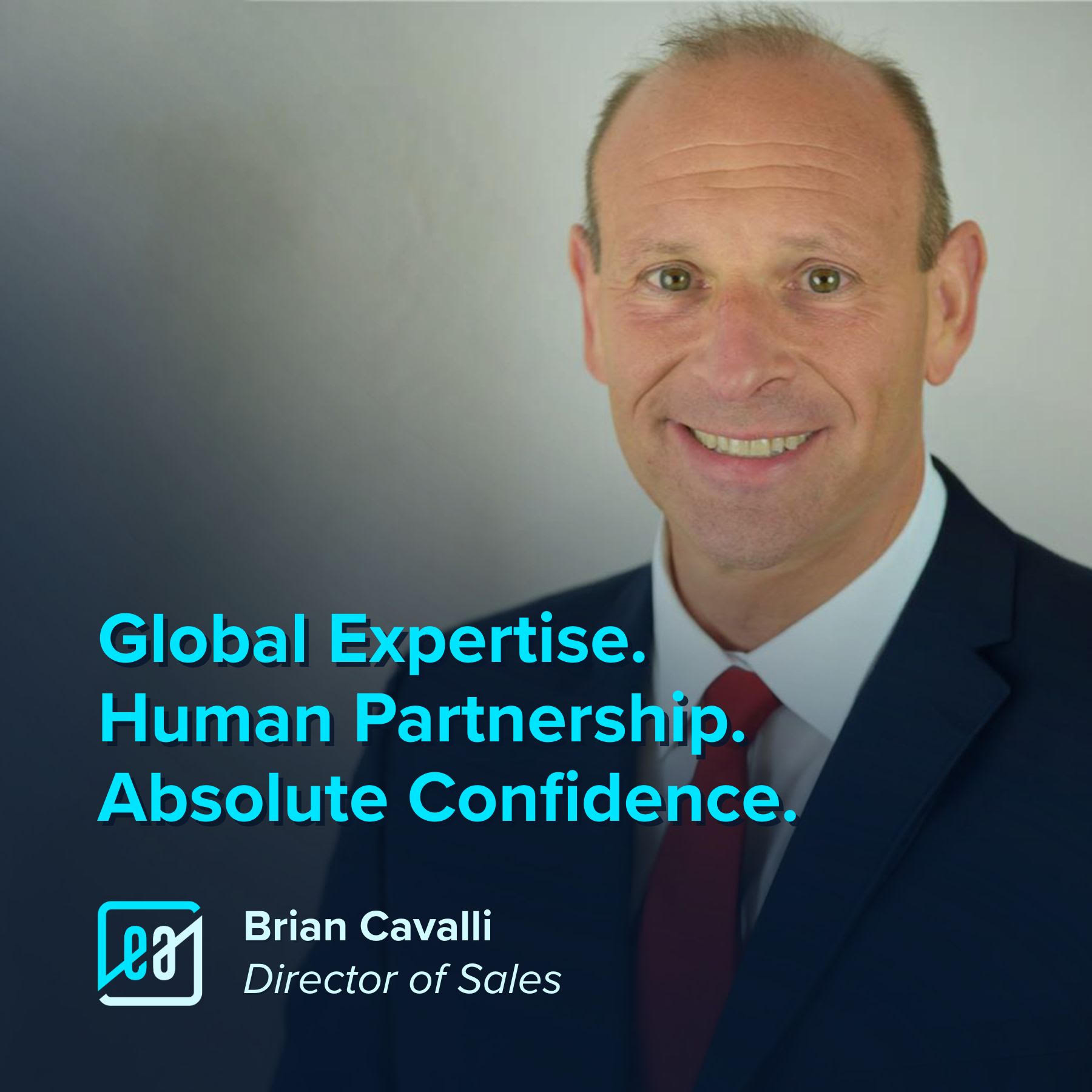
Director of Sales, EdgarAgents
In a global market defined by the complexities of the Securities Acts of 1933, 1934, and 1940, compliance is more than a requirement, it’s a mission. To execute it perfectly, you need a partner who understands the entire lifecycle of the deal.
Meet Brian Cavalli, Director of Sales at EdgarAgents. Brian specializes in guiding public and private companies through the most intricate regulatory landscapes, ensuring that every workflow is optimized for speed, accuracy, and absolute SEC compliance.
From transactional advisories and high-stakes mutual fund filings to the management of proxies and annual reports, Brian’s expertise provides a strategic firewall for attorneys, bankers, and issuers worldwide. He doesn't just offer a service; he provides the human-perfected oversight that transforms complex data into regulator-ready disclosures.
At EdgarAgents, we are dedicated to delivering a frictionless experience," Brian explains. "My goal is to provide a true end-to-end solution—from virtual data rooms to final distribution—ensuring that our clients can focus on their narrative while we own the execution."
Whether you are preparing for a domestic shelf takedown or an international exchange offer, Brian provides the veteran perspective and professional muscle required to file with absolute confidence.
Experience the standard of global execution: https://try.edgaragents.com/