What Founders Aren't Told Before a DESPAC with Roshan Pujari CEO Stardust Power
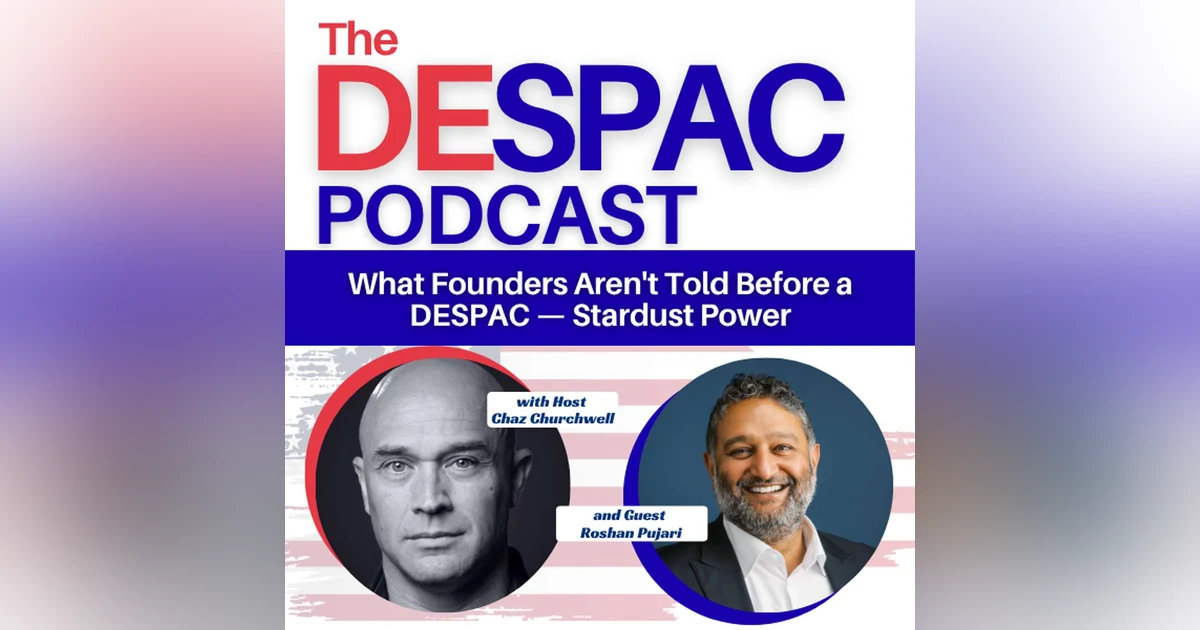

Stardust Power CEO Roshan Pujari gets candid about year one after a DESPAC: sponsor alignment, deferred fees, the S-1 danger zone, and the discipline it takes to survive.


Key Takeaways
- The DESPAC deal itself is the easy part; year one as a public company is the real test.
- Sponsor alignment, deferred fees, and transaction costs are hidden costs founders aren't told about.
- The S-1 'danger zone' and Rule 144 shelf eligibility matter after close.
- Newly public companies must balance retail and institutional shareholders.
- Roshan Pujari took Stardust Power from a 2023 startup to a shovel-ready lithium project in about three years.
What no one tells founders before a DESPAC: the deal itself is the easy part. Roshan Pujari took Stardust Power from a 2023 startup to a shovel-ready national lithium project in roughly three years — and he is refreshingly candid about the volatility, the hidden costs, and the discipline it took to survive year one as a newly public company.
EPISODE SUMMARY Roshan Pujari, Founder, Chairman, and CEO of Stardust Power Inc. (NASDAQ: SDST) and Founder of VIKASA Capital, joins host Chaz Churchwell for a practitioner-level breakdown of what really happens after the bell rings. Roshan walks through sponsor alignment, deferred fees and transaction costs, the S-1 "danger zone," Rule 144 and shelf eligibility, redemption risk, and the balancing act between retail and institutional shareholders. A clear-eyed conversation for any private company weighing a DESPAC, plus the macro case for U.S. lithium refining and onshoring critical-mineral processing for the EV and energy-storage economy. Essential listening for founders, CFOs, and capital-markets counsel.
What We Cover
- Why preparing for public-company life matters more than the transaction itself
- Sponsor alignment and who really controls the DESPAC process
- Managing deferred fees, dual legal bills, and the D&O tail policy
- The S-1 "danger zone" and warrant-redemption exposure
- Why capitalization, not share price, should drive your first year
- Navigating Rule 144, S-3 eligibility, and ELOC structures
- Managing redemption risk and tapping trust-account capital
- Balancing retail, day-trader, and institutional shareholders
- Leveraging volatility and price spikes to raise capital
- The U.S. lithium bottleneck and Stardust Power's Oklahoma refinery
Connect with Roshan Pujari Website stardust-power.com LinkedIn linkedin.com/company/stardust-power YouTube youtube.com/@Stardust-Power
Protect Your Transaction Churchwell Insurance Agency specializes in D&O, E&O, representations and warranties, and public company liability for SPAC sponsors, DESPAC targets, and post-merger companies. churchwellagency.com
Connect with Chaz Churchwell
LinkedIn linkedin.com/in/chazchurchwell
Follow The DESPAC Podcast Website thedespacpodcast.com LinkedIn linkedin.com/company/thedespacpodcast YouTube youtube.com/@thedespacpodcast
The DESPAC Podcast is proud to spotlight The SPAC Conference, happening June 9–10 at Westchester Country Club in New York. Host Chaz Churchwell will be speaking alongside leading voices across the SPAC and DESPAC ecosystem. If you’re considering going public through a SPAC, this is a must-attend event. Learn more at https://spacconference.com/
THE DESPAC PODCAST STANDARD LEGAL DISCLAIMER
The DESPAC Podcast is for informational purposes only. The views and opinions expressed by the host and guests are their own and do not represent the views of One Iron Network LLC, its affiliates, or any sponsoring organization.
Nothing in this podcast should be interpreted as legal advice, investment advice, tax advice, or a recommendation to pursue or avoid any transaction. Discussions may reference SPACs, DESPAC transactions, securities regulations, or public-company readiness frameworks. These conversations are educational in nature and should not be relied upon when making financial or strategic decisions.
Listeners should consult qualified legal, financial, and tax professionals before acting on any information discussed in this podcast. Any examples or scenarios mentioned are illustrative and may not reflect current market conditions or regulatory requirements.
Participation by a guest does not constitute an endorsement of any company, strategy, product, or service. References to specific firms or individuals are for context only.
One Iron Network LLC and the DESPAC Podcast disclaim all liability arising from the use of or reliance on the information presented.
Frequently Asked Questions
What happens after a DESPAC closes?
Roshan Pujari of Stardust Power says the deal itself is the easy part. Life after a DESPAC closes brings volatility, hidden costs such as deferred fees and transaction costs, and the discipline needed to survive year one as a newly public company.
What do founders need to know about the S-1 and Rule 144 after a DESPAC?
Pujari walks through the S-1 'danger zone,' Rule 144 and shelf eligibility, redemption risk, and balancing retail and institutional shareholders.
Who is Roshan Pujari?
Roshan Pujari is Founder, Chairman, and CEO of Stardust Power Inc. (NASDAQ: SDST), which he took from a 2023 startup to a shovel-ready national lithium project in roughly three years, and Founder of VIKASA Capital.
00:00 - Meet Roshan Pujari and Stardust Power
02:12 - Tapping capital markets to fund a lithium refinery
03:06 - Going public in a frozen, post-election market
05:13 - What founders aren't told before a DESPAC
07:26 - Choosing the right bankers and avoiding short sellers
09:23 - The S-1 danger zone and warrant-redemption risk
10:30 - Capitalization over share price in year one
14:13 - Deferred fees, dual legal bills, and the D&O tail
21:09 - Rethinking dilution, debt, and Rule 144 eligibility
25:17 - Advice for founders: structural and psychological
30:27 - Managing redemption risk and shareholder balance
34:23 - Volatility, ELOCs, and the China lithium dynamic
37:04 - Inside Stardust Power's Oklahoma refinery plan
41:09 - Closing: humanoid demand and a Knicks prediction
Chaz Churchwell:
What's going on everybody? It's Chaz, your host of the DESPAC Podcast. I am here with the CEO of all things good in New York. I, I just, uh, absolutely love this guy. You're gonna find this is Roshan with Stardust Power. He took his company public through a SPAC. We're hitting you from a totally different angle. You're a private company looking to go public, you wanna know what it's like if you go through a DESPAC process, this is your time to listen. So pay attention to what Roshan has to say. He's kind, he's brilliant, and he's got experience. Those gray hairs aren't just because he's the most compelling and charismatic man in the world, and you need to buy a Cerveza from him. So just pay attention to what this guy has to say as we dive in. Roshan, how you doing brother?
Roshan Pujari:
Great. Thanks for having me on, Chaz. Uh, I'll try… I'll do my best to live up to that.
Chaz Churchwell:
It won't be hard. It won't be hard. Um, and, and if you guys don't have the privilege of knowing Roshan, the first time that he and I really sat down and talked to each other, it- he's just so… You know, some people are just so easy to talk to. Roshan, you are one of those people, man, to where just I, I feel like people naturally, when they give you the opportunity to talk to you, they just naturally feel comfortable around you, and I just wanna celebrate you for that. It's a rare and beautiful trait for you to be able to do so. So, um, with that said, start off by just telling us a little bit about you and Stardust.
Roshan Pujari:
Yeah, happy to, and just really excited to be on the DESPAC Podcast. I wish this had existed before our process. It's great that you're filling in, you know, the information that needs to be happened. So, you know, my background is a bit unique. I, you know, the CEO of a boutique financial services company, Vacasa Capital, so had a lot of exposure to the industry, but then founded Stardust Power, and we had a very unique problem. How do you raise a bunch of pre-FID capital, so pre-construction capital for these large capital-intensive lithium refining projects? Um, so we saw the best opportunity to tap the capital markets and be able to leverage those to, for the enormous capitalization required, and we were largely successful in to do that. We were able to raise a lot of money to get us to the shovel-ready state.
Chaz Churchwell:
I love that. Keep going, keep going.
Roshan Pujari:
Yeah. And, you know, when we went public and when we started the DESPAC process, it was during a very challenging time in the market. You know- Right … the markets were volatile. The election was happening. You know, we started our process in the summer of '24, the election being in November, and the markets kind of froze. You know, a lot of people weren't doing deals before them, a lot of people weren't doing deals right after, as everyone wanted to rebalance and see the changes in the new administration. And then a lot of changes from the regulatory front, the, you know, changing of the Inflation Reduction Act, which removed the $7,500 tax credit from the EVs, created a lot more volatility in the market. Now, President Trump has been amazing for critical minerals, and he's been one of the most proactive administrations. So there's been a lot of long-term support, but it took us a while to kind of get our bearings. Um, so, you know, we came public in July of 2024 and, you know, there was a lot of wait and see. So, you know, what I think was important is that we had a strong plan for what we wanted to do and the reasons why we wanted to go public, especially via SPAC.
Chaz Churchwell:
I, I love that you said that, like the wait and see.'Cause I, I feel like a lot of companies, they come out the gate, they do the DESPAC, and, and they just kind of… They expect just a pageantry that everybody else is as excited about their company as they are to be public. Um, their attorney told them that they're pretty. Their investment banker told them that they're pretty. You know, the auditor says that they're pretty. Why would anybody be lying to them, you know? Like, uh, like, everyone's going to think that we're a beautiful company, and they're all gonna give us our money, and our stock's just gonna soar. Um, and, and the reality is, is that you're unproven whenever you come out. Like, and they wanna see how you're gonna perform. So I really love that you took that wait and see mentality, and you came into it eyes wide open.
Roshan Pujari:
Yeah. I mean, there's a lot of things you maybe aren't told in the very beginning. You- you're so focused on the transaction itself, but that preparation for being a public company is really, you know, maybe the most important part of it, as the DESPAC is just the beginning of a journey really. Um, so some of the things to consider are who your strategic partners are. You know, one is that alignment with the sponsor is so important. Um, you know, they control a bunch of shares. They control a lot of decision-making in the DESPAC process. Um, they can potentially have board representation. So the right sponsor is so important. Do they believe in the company? Do they believe in the long-term success of the company? Yeah. Are they just trying to get a deal done? Are they just trying to return liquidity as much as possible? And, you know, you never know with certain sponsors. So really having that alignment from the get-go, and how you structure the deal, and how you live as a public company is important. And another thing that's so important is managing costs during the DESPAC Typically, the, the surviving entity pays for the transaction cost and maybe even some accumulated cost of the SPAC sponsor. Yeah. So we have to make sure that both parties are aligned to keep cost efficient, otherwise you have a new public company that's saddled potentially with a lot of payables and/or debt, which makes it a tough go from the outgo. And sometimes these sponsors, you know, are not aligned to keep costs down because it's not on their dime, and they can build relationships, they can do other things. So strong alignment with them is, is really important. And then other strategic partners as the right bankers. You know, typically, they're new companies are gonna have to raise some money in the near term, and finding the right banking partners can be a challenge as a new DESPAC, as a non-Rule 144 eligible company. Um, so having the right bankers and the right strategic partners from the get-go is important, and that really includes legal as well. Yeah. Having the right advisors that can be efficient
Chaz Churchwell:
Do, do me a favor. Unpack real quick why? Like, why does it matter, like, from your perspective, what did you experience to where you realized it's different if I use this banker versus that banker? Obviously, we're not throwing people under the bus, anything like that. But speaking ambiguously and generally, like, um, what, what do you think that these private companies should be looking at when they're engaging a banker from their side, and why do they need a banker from their side?
Roshan Pujari:
Yeah. It's a tough choice to pick the right bank. You know, depending on market size and the interest of institutional investor, a lot of recent DESPACs are not gonna get bulge bracket banks. And maybe if they have good institutional investor support already on their cap table or they're in a sector, but, you know, there's so much volatility around the DESPAC that often you're not gonna get the bulge bracket right at the beginning, and you'll have to look at second and maybe third-tier, third-tier banks. And some of these banks have, you know, different ways of doing business. You know, picking the right investors for those opportunities are really important. Some banks act as equity capital market desk for, you know, large hedge funds, in essence. So you really have to be careful who the bank is and what type of investors they're gonna bring on. Because, you know, in New York or the market, some funds will invest just to short your stock even. Oh, hundred percent. You think they're really excited about giving you all this money, but they're really doing it to short your stock. So finding the right long-term partners, even from investors and bankers, is really important.
Chaz Churchwell:
Yeah. And, and you've got a special someone down in Puerto Rico who'll, who will call you up and say, "Hey, I'm, uh, I'm your largest rights holder and, uh, just got a few questions for you," all the while he's the guy that's been crushing you and shorting you. Right? So, um,
Roshan Pujari:
You know, another interesting thing that some people might not tell you is there's this period of, uh, insecurity, I'll say, prior to issuing your S-1, um, you know, after you do the DESPAC, you do it through an S-4, then you have to initial… release the initial S-1. Yeah. But there is this window where potentially warrant redemptions can come in that you're not being able to honor. So we have, you know, people calling us up- Asking about these warrants, and if we would have said the wrong answer, it could have invited a lawsuit. Oh. So there's a lot of dangers in that DESPAC, uh, period too, and those warrant holders, you know, are important to be aligned as well.
Chaz Churchwell:
And that's one of those things to where it's like tale as old of time. You don't know the answer. So if you don't know the answer, say,"That's a great question. Let me find out about that for you." And then you go talk to your attorney and your TA, you know? And like, and get the real story. But yeah, so, um, let me ask you this. I, one thing, whenever you talked about the the eyes wide open kinda thing, um, how concerned with you, were you about share price whenever you guys came out?
Roshan Pujari:
You know, I'll admit it, I was too concerned about share price. When we, when we DESPAC'd, we were trading around a market capitalization of 500 million, and we were a very young company. And I sincerely believe that's the value of the company. Now it should be even more considering we've moved our project along. And we traded very well for the first four or five months. Um, and you know, we were very concerned. You know, we really should have been less concerned about share price and more concerned about capitalization. In the initial days of a SPAC, there's always some volatility, and what we see is there's even these days where you had these tremendous price spikes. You know, I was a billionaire for overnight one period. So it was nice to cross that off the list. Um, but you know, even though it wasn't, it was grounded in whatever it was, leveraging those times to raise capital- and leverage those spikes, being prepared for those spikes. So you know, what I really urge is it's a long journey. The share price for the first four months, you know, tracking it every day as new sponsors or you know, new companies will do. But really focus on capitalization from the right sources, and that's a recipe for long-term success.
Chaz Churchwell:
Man, that is so well said. Like, 'cause and- and here's the thing. Tell me this. Did you have- Did you have people in your ear that were telling you that you needed to be sweating that stock price and, and like, and basically pushing your attention back to it and, and giving, uh, giving a hard time about it? Um, yeah, I… First of all, I'd love to know that.
Roshan Pujari:
You know, I- we- not really. We were really lucky that our private company investors were well-aligned and, you know, they had produced so much wealth. You know, we were tracking, we call it the houses that Stardust built because so many people were going out and buying new homes because of the tremendous wealth. So our investors, even through the volatility, I think returned out nice. Um, but as a new issuer, I think we were pretty concerned about that and really maybe less willing to share, sell shares into the market if we thought it could lower our price. Um, inevitably the first deal we did as a public company was a short-term debt deal that, you know, maybe wasn't the best deal, but it solved a short-term need, and that impacted the stock price more than anything. And then we had to do multiple S-1 raises prior to being S-3 eligible. Um, and, you know, doing multiple raises in a short time was a, a difficult period for us and created a lot of volatility. But at the end of the day, we got to this position of being a shovel-ready lithium project. It's taken us 45 million-ish to get there, which is a pretty reasonable amount of money, but we're able to do that in a really short time. Our mantra's always been speed to market. Let's get this refinery built as fast as possible.
Chaz Churchwell:
It's so interesting, like a lot of times companies think, "We did it. We rung the bell. We DESPAC'd. We're public." And they look at it as the finish line when the truth of the matter is it's the starting line, you know? And it's, it… So you had challenges dealing with the S-1s, everything like that, trying to even get to, to being able to, to have the shelf registry. And so let me ask, what other complications do you feel that you kind of ran up against unexpectedly? You're public and, and you kinda got blindsided by something.
Roshan Pujari:
Yeah, you know, I, I really thought… I think it was the form in which we had to raise money. We were able to raise a really strong PIPE, um, 12 million in pure common equity with no warrant exposure. Um, but I think the cost- Mm … of the DESPAC escalated so much that we could have utilized that PIPE to take us all the way to run Rule 144 eligibility, which is 365 days afterwards. But we, we were burdened with so many transaction costs that we had to go and raise money over and over again. So I think a good rule is to, you know, really have a strong plan of capitalization through Rule 144, which is roughly the same time you can be shelf eligible as well. Um, S-1 open offerings can have a significant impact on the share price, um, and doing multiples of those was, was challenging
Chaz Churchwell:
Yeah. Um, I, I know that whenever, 'cause you talk about just these expenditures, and they can be, depending on the SPAC team you do a deal with and how their stuff was structured. For a SPAC team, obviously their biggest cost is underwriters, traditionally. You know? And there's an upfront cost, like if you're a private company looking to going public, and you may not know this about how it works for the SPAC team and how it could impact you on the backside, but, but these, these SPAC teams, they have their upfront cost to do the IPO, and then a lot of time there's shares, rep shares that go into the deal. But then further to that point, there's a, there's what's called deferred compensation, and this deferred compensation on the backside is what can be impactful for the private company. Because a lot of times that money is coming out of trust or coming out of proceeds from somewhere. Um, and it, it could be one of those things to where you may think, "Oh, we're, we're gonna walk away from this with $50 million." And then the underwriter's now like, "No. Actually, uh, we, here's our agreement. We actually get this amount of money," and, and it's a, a few million bucks. And you're just like, "Oh. Oh." So it's all of a sudden 3% of the$150 million, uh, of the deal. You know? Or, or something like that. And they, it, it can be, uh, it can be a lot when it doesn't get contended with, and that's not even including other variables like deferred compensation for the attorney, deferred compensation for the auditors. Um, then you've … And then you as a private company, like what other cost were you picking up?'Cause I know with every SPAC team it can be different. Did you pick up IR, PR, things of that nature? Um, pay the DESPAC or do, did you pay the, uh, the tail policy for the SPAC team for their D&O insurance?
Roshan Pujari:
Yeah. So we definitely had to, you know, pick up the insurance policy including the tail. That's, I think, pretty standard in any transaction 'cause you're the surviving entity. So that one's hard to fight back on We chose to do all the IR and PR so we could control it, we can control cost. I love that. And I think that was a cost well served. We were very efficient, and we got a lot of good publicity, um, from that. Those legal fees are… can be a lot, you know. Um, the SPAC sponsor can run up a lot of legal fees calling it due diligence as a CYA. Um, but, you know, how much… You, you decide how much you need to do of that, and then you're paying for both sides. You're paying two legal teams to argue each other, and you're picking up the same bill, so alignment can be challenging there. Um, then, you know, uh, uh, printing can be a substantial cost. In a billion-dollar- Yeah … transaction, you know, no one's gonna think about a million dollar printing fee, but for a smaller transaction, you know, that can be a lot, and there's a lot of optionality in that now. Um, and then as you mentioned, the, the banking fees, the capital market advisory fees, and then deferred fees that the SPAC might have been running in their search for other targets as well. So you really have to be thoughtful on looking at what those deferred cars, costs are- Yeah … potentially capping them or creating payment plans over a period of time and not having so many bills hit the day of listing, um, which can be challenging.
Chaz Churchwell:
Yeah. Absolutely. Um, because it is a capital intensive thing just to do the DESPAC, but, and, and further to that point, you specifically are in a crazy capital intensive industry. Um, projects for lithium refineries are, I, I just have to imagine, just insane for how much it costs to hit that inflection point to where you can start printing money out of it. Am I wrong?
Roshan Pujari:
No, that's an expensive industry. You know, we recently released that, uh, the CapEx requirement alone for our phase one is half a billion, and that's just from a CapEx perspective, so if you throw insurance payments and, and some other costs, it, you know, can be substantially above that. So it is a very capital intensive industry. Um, you know, we've been talking a lot about the challenges and the expenses of a DESPAC and the volatility that can happen with it, but I still think it's a great tool- Absolutely … and a great process if you go into it eyes open, and you have a plan. Even though we've suffered a lot of volatility in our share price, the fact that we have gone from a newly incorporated company in just 2023 to a shovel-ready national infrastructure project in 2026 is Amazing, if I can say so myself. Yeah. So, you know, it's, there's been a lot of challenges, there's been a lot of gray hairs and sleepless nights, but I'm really excited of where we are now, and I think that DESPAC can be a great vehicle.
Chaz Churchwell:
So I agree with you 100%, and I mean, man, the fact that, just to your point, the fact that in three years you've been able to execute what you have, you couldn't have done that through a traditional IPO process. It just wasn't, it wasn't viable. But yet you were able to go out, get the capital you need, position yourself to secure more capital to be able to do corporate financing, project level financing, and, and really be able to get things going at a clip that would've taken you, if you didn't do that, an extra 10 years probably?
Roshan Pujari:
I mean, it could've, could've taken a long time. I don't think we'd be where we are today if we weren't able to tap the capital market.
Chaz Churchwell:
Yeah. So, okay, so let's think about this real quick. How has your thinking evolved around dilution, debt, strategic capital since you've gone public?
Roshan Pujari:
Yeah. So, you know, I think we were in a very unique place that we were able to move our company forward as a private company swiftly and efficiently, that I was pretty chunky when we became a public company. So I understood that I would get diluted, but as long as we were moving our objectives forward, I was very happy because what we're building is so valuable. So, you know, last summer lithium prices cratered to $5,000 a ton-ish. They've rebounded today to 28,500-ish. Wow. But we had to sell shares at the nadir of the lithium market at, you know, 20 cents or something like that. Even though it was a very dilutive event and a challenging one, it still kind of pushed us over th- to this shovel-ready state. So I think what's most important is if you believe in what your company-- You can't worry about dilution on every transaction. You know, the right type of debt can be valuable, debt that won't cripple you, the right type of debt investor especially,'cause you'll get all types of options. There were, you know, forms of agreements I've never even seen before that's so challenging to work through. You just, you know, the, the restrictions they placed on you. Some investors will place so many restrictions that you have to go to them again for potentially another bad deal. So navigating that space is challenging. Um, so if you have a really strong plan when you go into being a a public company, especially if you can limit the cost, you limit the capital outlay for the first year. Once you get to that first year and you're, you can be shelf eligible, you can be Rule 144 eligible, the universe changes a lot of it. And so, you know, maybe some of your listeners don't understand the Rule 144, but, um, the SPAC is an effectively a shelf company when you merge. The Rule 144 is a different way that brokers are allowed to trade your stock. So a lot of brokers don't want to take Rule 144 registration risk. The shares are registered by an S-1, so that can affect liquidity, it can affect volume, the ability to raise capital. But manage that first year and it's a, it's a, it's a new day a year later.
Chaz Churchwell:
I love that you said that because I, I I feel like some people, they come out, they do the DESPAC. All of a sudden it's like, "You get a car. You get a car." Everybody's just like, "We're rich." And they just start blowing money instead of keeping that entrepreneurial spirit and staying locked in, staying lean. They're like, "We're free from the shackles of private equity. Let's go." And like, and, and now they just, uh, they just end up spending frivolously and just throwing crap out there to see what sticks instead of working the plan, executing the plan, being disciplined, being lean. Because to your point, if they don't operate that way, they can end up burning through cash faster than they ever thought was possible.
Roshan Pujari:
Yes, and the worst time to raise cash is when you need it.
Chaz Churchwell:
Right? Yes. Okay. So let me ask you this, 'cause we're talking about, like, we're talking about these things that are kind of axioms, right? Like what not to do or, uh, if you're, if you're a private company going public. So let me ask, if you were advising another founder who's considering a SPAC, um- What would you tell them to watch out for structurally and maybe even psychologically? Because it's a mental game, right? Mm-hmm. Um, there… It, it's challenging even psychologically for the strongest of us. So structurally and, and psychologically, uh, what would you tell these founders to watch out for?
Roshan Pujari:
Yeah. I mean, the first thing on the psychological side is, you know, the high… Can't get too high on the highs, can't get too low on the lows, and there'll be so much volatility, and you'll be watching your share price every day. But focus on the plan and what the purpose is of the company, um, and that's what's really important. And, you know, from a structural perspective is be prepared, you know, understanding what needs to happen next.'Cause once you're, once you're a public company, there's still so many things that have to happen in the short term. Be ready with that S-1. I've seen companies take months to file that initial S-1, and that is kind of a danger zone or insecure period of time as a public company and will limit their options on being able to raise money. You know, there's a lot of different, uh, forms of agreements that you, you have to worry about. You know, ELOCs are very, um, popular, equity lines of credit, but not all ELOCs are the same. So understanding how the investor will trade your shares, how the counterparty makes money is really important. How the counterparty values warrants on their balance sheet is something no one ever explained to me as a private company but became critically important. So be prepared, your strategic partners, your legal filings, and capitalization, um, and I think you could, you could manage it through really well. Now, the IRPR part is really important as well, um, being aggressive out there, attending the right conferences. You don't have to go to them all, but the right one, and managing to, you know, have a thoughtful pipeline of press releases as well. You know, be communicating to the market, not changing your plan, just executing it.
Chaz Churchwell:
I, I'm so glad you said that. Uh, two things that I- if you didn't catch it, listeners, that he just said that are absolute gold right there. Number one is that if you're gonna take public money, you've gotta be public facing. If, if they can't see you, they don't know you. Your company is not all roses to where everybody's just clamoring and clawing all over the other person so that they can buy shares of your company, most likely. And so there's 6,400 companies competing against you to get the affections and dollars of investors. So you have to put yourself out there to give visibility and awareness for your brand. And then the other thing is really just, in my mind, you've got to have your mindset from a perspective of not getting on the highs and lows. You were talking about that. Not getting there. In fact, there's a It, there, there's a, a book I read not long ago, and I wish I could remember which one it was, but, um, they talked about this guy is the CEO of a public company. He looks at his stock price once a week. That, that he's like, "If I look at it more than once a week, my mind'll start playing tricks on me, and I'll be so consumed with what's happening with the stock price that I feel that I lose control of my own mind, and I can't be confident to execute the way that I need to be able to." And so it's kind of like as a CEO, CFO, leaders are gonna have to find their rhythm, their way of how they're gonna pay attention to or selectively not pay attention to the stock price so that they can make sure that the price of a stock one day isn't determining what they do to execute,'cause you talked about execution. You've got a strategy. You didn't just take the money because you wanted money. You came … That SPAC team worked with you because you have a plan to execute. And so work the strategy. Work the system. M- and, like, you've got these things that you're gonna do. That's how you get your price up. Say, "Hey, guys, in the next quarter we're gonna do this," and then come back three months later and be like, "We did it. We told you we were going to. We went. We did it." So- Mm-hmm … and, and you just keep doing that, and they're like,"Holy crap, these guys just keep winning. They keep delivering. We love it." And that's how you get visibility and stock price up in a lot of different ways. So, so let me, let me ask you this. There's a few different angles that, like, that I, I want to try to kind of weave in. I want to talk about managing redemption risk, and because there, there's that balance of retail and institutional shareholders, um, that's there. And sometimes that can fall out of redemptions, um, on one side. It can fall out of redemptions on the other side. And then there's also trying to keep both of them happy because they want different things. So could you talk about kind of how you, uh, how you feel some good ways are to help these companies manage redemption risk, and then talk about the idea of balancing, that balancing act between retail and institutional shareholders? I just, you're on mute, brother
Roshan Pujari:
Sorry. Excuse me.
Chaz Churchwell:
All good. All good.
Roshan Pujari:
Um, great question though, and, you know, really important. And I think the first thing to realize is that the trust is the most efficient source of capital you can have as a recent DESPAC company. So it is worth the effort, worth the time and resources to communicate with the trust, explain the plan- Yeah … explain, you know, short-term milestones, um, and, you know, uh, to limit redemptions. Now, we have to be honest, a lot of those trust investors are, you know, interest arbitrage plays, and their purpose is to invest in the trust, and that's fair, and that's their, you know, mode of business. Um, but I think that you can find money in the trust, especially if there's short-term milestones that you can articulate a way for investors to safely redeem their money, even if it's not on the DESPAC. Um, so that's really important. And I think, you know, with other institutional investors, it's, you know, where… honestly recognizing where other institutional investors were coming. Institutional investors might not start investing right on the DESPAC. If you're ahead of these large mega trends, there are those opportunities. Critical minerals can be one of those. Rare earths is really popular right now. But communicating with institutional investors. And like you said earlier, be consistent. Execute your plan. Yeah. Tell them the plan, execute it, and told them you've done it. And they see this over a period of time, and I think they, it starts to garner some trust. So building that pipeline of institutional investors. And then there's even opportunities a year later to be ex- included on certain ETFs or ex- you know, or other type of funds, so you can get this, um, base of non-volatile shareholding. Um, so thinking about it from a long-term perspective. And retail investors, you know, can be a blessing and a curse. Yeah. So you gotta be careful there as well. I think the right retail investors that believe in the story that can be long-term investors are great. And, you know, they'll tell their friends about it, and they'll be excited to own your stock. Then there's a set of day traders that can be challenging, um, because, you know, you release good news, your stock goes up, and they might sell their entire position. So if you have a big chunk of day traders on your capitalization table, it can sometimes create limits to your growth. Yeah. So the answer to that is communication with institutional investors, and you wanna build that institutional investor base on your cap table
Chaz Churchwell:
100%, I agree with. I'm, I'm sitting here just, uh, I don't know if you've ever had Dr. Pepper Creamy Coconut. I've never had one before, but my daughter bought them yesterday, and so I'm having my very first one. And I'm sitting here looking at this can as you're talking about those day traders, and I'm just kinda thinking, it's kinda like a Dr. Pepper Creamy Coconut, that it's insanely good for a moment, but then- but then you just, you know that at the end of the day it's probably not the best results to have in your body.
Roshan Pujari:
Y- it, you know, there's a lot of advantages. We have some great retail investors, uh, and you know, we have some that will, uh, you know, call us up every week.
Chaz Churchwell:
I like it. I like it. Okay, so let me ask you this. Um, I wanna know from, like specifically from the lithium market, there's been a lot of volatility that's there. Um, and, and obviously this doesn't have to be germane only to lithium. There's a lot of companies that get a lot of volatility. And so I'd love to know from a standpoint of volatility post-DESPAC, is there any, any lessons that you've learned that we haven't already turned the stones over on?
Roshan Pujari:
Yeah, you know, one big lesson is there will be volatility, you know, as, as your ch- cap table gets remade at the-- after the DESPAC. Investors will redeem or sell shares, new shareholders will come in that are interested in the story. And I think what's important is if you could make money on the way up and make money on the way down to leverage that volatility to capitalize the company, which means having the right structures in place, um, is important, you know, before that happens. Being ready- Yeah … to effectuate. You often see with the new DESPAC, you know, there's always a spike, always seems to be a spike in one day. Being ready for that, whether it's a, a, a type of synthetic ATM or an ELOC or an overnight pipe or an intraday pipe, having the right bankers set up or having the right, um, ELOC set up to leverage those type of things. In the lithium market, it's really interesting because we really gotta understand about the lithium market is that the Chinese control of critical minerals is a, is- Is at … at the center of it. You know, they were able to, we believe, um, manipulate the price to stave off foreign competition. Prices skyrocket to 70,000, and then we see this compression by China over-flooding the market. But their ability to do so has dramatically changed because especially, among other things, the rise of Chinese EV adoption. China's selling so many EVs now that they can't flood the market as easy in the, in especially coming up. They'll need it to build their own EVs, um, so their ability has changed, and that's why it's such a national security priority for us to onshore processing. Which is why I know that even though our stock is, you know, can trade up, can trade down, can trade at a lower market capitalization, that what we're doing is very valuable, and as long as we continue the plan and execute it, um, our shareholders will be rewarded.
Chaz Churchwell:
So, and, and I love that you, you kinda went back and brought it back to talking about Stardust Power, 'cause I wanna actually go there for just a moment. Um, I, I wanna just give you a moment to tell people a little bit more about Stardust, where you guys are headed. Because you talked about telling people, "This is what we're gonna do," and then doing it. I wanna just give you a second right now to tell people what is Stardust going to do that you can say right now that they can watch you, and that they can actually build trust by you executing on that?
Roshan Pujari:
Yeah. Thank you, and happy to discuss it. Um, so what, you know, we all know that lithium is extremely important. You know, the world's economy is running on batteries, and as EV adoption is what it is also for energy storage systems, for battery storage components on the back of data centers and AI, it's never been more important. America's got a lot of lithium resources, potentially the fourth largest reserves in the world, but we don't have this processing capacity, and that's how China is able to effectuate its stranglehold on the global supply chain by controlling processing. So at Stardust Power, what we're doing is we're building a really large, centrally located lithium refinery located in the Heartland, right in Oklahoma, where we have a geographic advantage. Being the center of the country, we can source raw materials from anywhere. And what we're doing is optimizing this large central facility for multiple sources of lithium fluoride input, so we could, you know, take two thousand tons, five thousand tons from different suppliers, limit our supplier risk, aggregate that supply and scale to fifty thousand tons per annum of battery-grade lithium carbonate when we're at nameplate capacity, which would triple, more than triple the existing production we have in America today. So it's a huge piece of national infrastructure It's never been more important. Um, so what our plan was is we're gonna get this ready. We're gonna de-risk this project on off our own balance sheet and then bring in our strategic partners. And so what I think the market has seen is, you know, we've acquired our, our site. We bought it outright, sixty-six acres in Muskogee with a option on addition- additional forty, a form of option. We've done all the due diligence to de-risk it, cultural, environmental. We've done all the front-end loaded engineering culminating in our FEL3 engineering study done by Primero USA. And those-- that process is millions and millions of dollars in engineering study. We then took the extra step of an independent review, having a third party review our engineering to corroborate all of it. We then got it fully permitted, not only for construction, but for commissioning and ramp up, which is not required at this stage, but we wanted to show institutional investors that we can launch this facility. We put a team in place that can handle this execution that is expert at construction and, you know, placement of that. We've brought in the right strategic partners. So we've invested over ten million of our own balance sheet just to get the project to this shovel-ready type state. And now we're talking to institutional investors, strategic investors, and they're pretty impressed because no- everyone knows we need processing and a lot of drilling upstream, a lot of raw material investment is going on, but no new processing has come online. So now that we're here, you know, then we work every day on financing our asset, and then we can start the major construction process. A quick, call it two years, a little bit under two years to build it, and we can start producing battery-grade lithium carbon in America
Chaz Churchwell:
I love it, man. I love it. And I will add to this kind of as a, as a closing thought on that. I, I think that, that a lot of people are underestimating how much lithium is going to be needed because there is a new wave, I believe, that's about to hit our country and the world of, of draw down on lithium, which is humanoids. I, I believe that robotics, um, I, I just, I see that people are gonna be in the next five years, you're gonna start seeing people having humanoids in their home more commonplace, um, big battery supplies. And as we continue to grow and grow and grow in our demand for robotics, uh, it, it's just going to amp up the need for you guys even more. So let me ask a final question and, and we're gonna shut everything down here. Um, for you, I, I'd love to know, would you rather have, uh … W- would you rather have … You're, you're gonna get so mad at me on this. Uh, if you were building an all-star team, would you rather have Chet, um, Holmgren, or, or would you rather have Wemby?
Roshan Pujari:
I mean, I love Chet Holmgren, and, you know, I think he's gonna continue to become a, a great player, an all-star, and an excellent performer. But, I mean, Wemby is a once in a generational type. It's almost unfair. Um, but the New York Knicks have figured out an answer for him, so, uh … But, you know- I- Wemby's pretty good.
Chaz Churchwell:
Dude, and, and, and just so the listeners know, if you're paying attention, um, Roshan is a, is a legendary OKC Thunder fan. Um, and so, it, so it's just me giving him a little bit of a, a hard time because he is a, he, he is not a fair weather fan. He is a, he's true blue and orange for those guys. And, uh, it, even, like, just even in the off season he's showing them lots of love. So, um, so are you picking- I will
Roshan Pujari:
I, I will say, you know, I was born in New York, so I grew up a Knicks fan.
Chaz Churchwell:
Are you
Roshan Pujari:
picking the Knicks? And, you know, then, you know, I I I was born in New York, but I grew up in Oklahoma, so my life dream is having the Thunder and the Knicks play in the finals. And last year we were close. Almost. This year we're even closer. So, you know, I'm sad my Thunder lost, but, uh, I'm really proud of my Knicks, and they're gonna bring home the title this year.
Chaz Churchwell:
So you picking Knicks?
Roshan Pujari:
Oh, Knicks in, Knicks in five. The gentleman sweep.
Chaz Churchwell:
Knicks in five. Okay. Okay. I'm watching. I'm watching. I love it, brother. Okay. Everybody, again, I'm here with Roshan from Stardust Power. Check out their company. They're doing, again, as, if you can't tell already, some remarkable things. Roshan, I'm so grateful for you popping the hood, helping private companies looking at going public, and considering a SPAC to do it, hear about your story and some of the processes that you kind of learned the hard knocks on. So thank you so much for being a blessing and sharing that with our audience today. Uh, thanks for being here, man.
Roshan Pujari:
Yeah, thanks for having me, Chaz, and I really appreciate all the work you're doing for the ecosystem, and getting the knowledge out there, and being a trusted advisor to public and private companies. You know, I think that's, uh, such a service you're doing to the community. I really appreciate you having me on, and I look forward to seeing you again soon.
Chaz Churchwell:
Appreciate you, brother. Everybody, again, my name is Chaz. I'm with Churchwell Insurance Agency, and I'm your host of the DESPAC Podcast. Blessed to have Roshan here with Stardust Power today. Make sure that you subscribe on the homepage. And, and do me a favor, check out some of the YouTube. We got lots of edits that are about to be dropping here in the next week. You don't wanna miss what's coming there. Blessings. We're out.
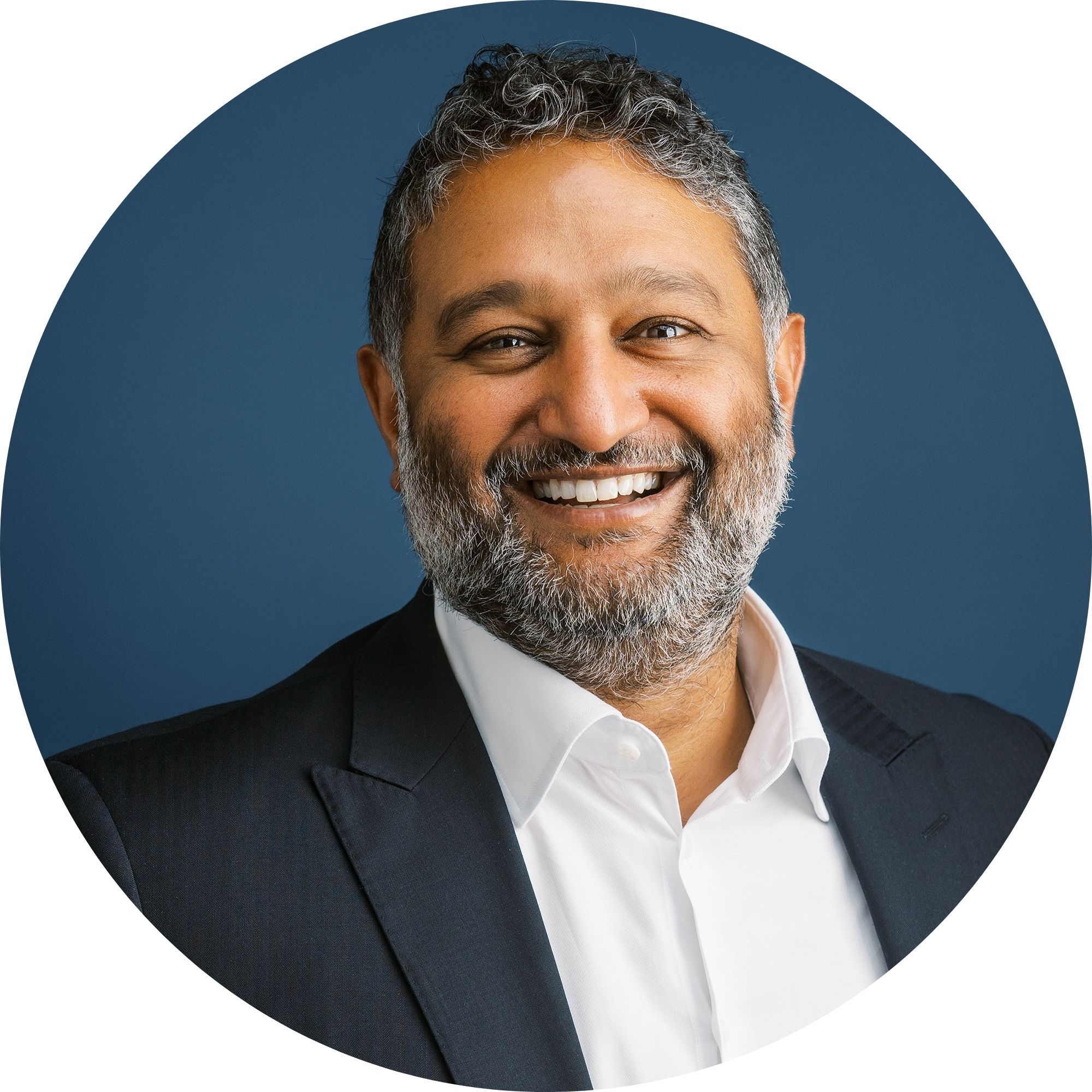
Founder & Chief Executive Officer
Mr. Pujari is the Founder, Chairman, and Chief Executive Officer of Stardust Power Inc. (NASDAQ: SDST), an American developer of battery-grade lithium carbonate focused on building one of the largest lithium refineries in the United States. He is an entrepreneur and investor with over 20 years of experience spanning finance, clean energy, and specialty chemicals, with a track record of advising on and executing more than $2.5 billion in transactions.
As Founder and CEO of Stardust Power, Mr. Pujari has led the Company’s strategic development from inception, including corporate strategy, capital formation, and the build-out of its operational and leadership teams. Under his leadership, the Company has advanced its flagship lithium refinery project in Muskogee, Oklahoma, positioning Stardust Power as a key player in addressing the U.S. midstream lithium bottleneck.
Mr. Pujari is also the Founder and Chief Executive Officer of VIKASA Capital Inc., a global investment and advisory platform focused on energy transition and emerging markets. Through VIKASA, he has invested in and advised on over $2 billion in transactions across clean energy and lithium, and launched VIKASA Clean Energy I LP, a $50 million private equity fund targeting U.S. lithium brine assets. He has also built and scaled affiliated platforms across investment management, capital advisory, and international asset management, with operations spanning North America and Asia.
In addition to his professional work, Mr. Pujari is actively involved in philanthropic and community initiatives… Read More